Marketing · 6 min read
What Is Digital Marketing? The Main Channels Explained Simply
What is digital marketing? A simple guide to the main digital marketing channels, from SEO and content marketing to paid ads and email marketing.
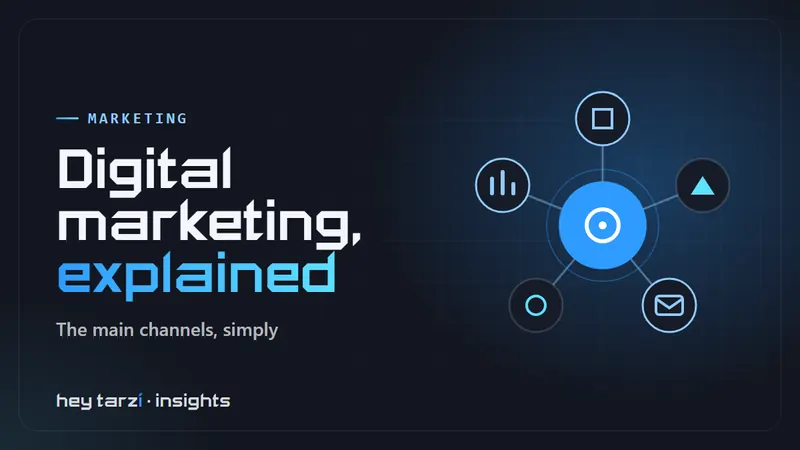
What is digital marketing? Put simply, it is any marketing that reaches people through the internet or digital devices: search engines, websites, social media, email, online ads and more. If a customer finds you on Google, sees your post on Instagram, clicks an ad or opens your newsletter, that is digital marketing at work.
The term covers a lot of ground, which is why it can feel overwhelming. This guide breaks it into its main channels, explains what each one is good for, and suggests how a small business can choose where to start without trying to do everything at once.
How digital marketing differs from traditional marketing
Traditional marketing includes things like leaflets, newspaper adverts, radio and billboards. They still work for some businesses. Digital marketing differs in a few useful ways:
- You can measure more. You can usually see how many people visited a page, clicked an ad or opened an email.
- You can target more precisely. Ads can be shown to people in a specific area or searching for a specific thing.
- You can start small. Many channels let you test with a modest budget and adjust as you learn.
- You can change quickly. A website or an ad can be updated in minutes rather than reprinted.
None of this makes it automatic. Digital channels reward clear messaging and steady effort, just like any other marketing.
The main digital marketing channels
Your website
Almost every other channel points back to your website, so it comes first. A good website loads quickly, works on phones, explains clearly what you offer and makes it easy to get in touch or buy. If the site is confusing or slow, money spent sending people to it is partly wasted.
For a local plumber, that might mean a homepage that states the areas covered, a page for each main service, real reviews and a phone number that can be tapped on a mobile. Our web development work focuses on exactly these foundations.
Search engine optimisation (SEO)
SEO is the work of helping your site appear in unpaid search results when people look for what you offer. It covers on-page content, technical health, local listings and reputation. It usually takes time to build, but the visibility you earn does not stop the moment you stop paying.
If you are new to the topic, our guide on what SEO is explains the basics, and how to rank on Google goes into the practical steps. Our SEO service covers technical audits, keyword and intent mapping, on-page work, local SEO and monthly reporting.
Paid ads
Paid ads put your business in front of people in exchange for payment, usually per click or per thousand views. The main types are:
- Search ads: text ads shown above or below search results for chosen searches, such as "boiler repair near me".
- Social ads: image or video ads on platforms like Facebook, Instagram, TikTok or LinkedIn, targeted by location, interests or demographics.
- Display ads: banner ads on websites and apps.
- Shopping ads: product listings with images and prices, useful for online shops.
Paid ads are fast. You can switch them on today and see clicks today. The trade-off is that traffic stops when the budget does, and poorly set up campaigns can spend money quickly with little to show for it. Careful targeting, clear landing pages and regular checks make the difference.
Content marketing
Content marketing means creating useful material, such as guides, videos, how-tos and checklists, that attracts and helps your audience. It supports SEO, gives you something to share on social media and email, and builds trust before someone is ready to buy.
A bakery might publish a short guide on how far ahead to order a wedding cake, or a video showing how its sourdough is made. Neither is a hard sell, but both help a customer feel confident choosing that bakery.
Email marketing
Email marketing lets you stay in touch with people who have already shown interest: past customers, newsletter subscribers or enquiries. Because they chose to hear from you, email can be one of the most direct ways to bring people back.
Practical uses include:
- A monthly newsletter with news, offers or tips.
- Reminders, such as a service due date for a boiler.
- Welcome emails for new subscribers.
- Follow-ups after a purchase asking for a review.
Always get clear permission before adding someone to a list, and make unsubscribing easy.
Social media
Social platforms let you show the personality behind your business, share your work and talk directly to customers. Organic posting (unpaid) builds a following over time; paid social ads extend your reach.
You do not need to be everywhere. A wedding cake maker may get far more from Instagram and Pinterest than from LinkedIn, while an accountant may find the opposite.
Local listings and reviews
For businesses serving a local area, a complete Google Business Profile, accurate directory listings and a steady flow of genuine reviews are some of the most valuable digital assets you can have. They often decide whether you appear in the map results when someone nearby searches.
AI search and assistants
More people now ask AI assistants for recommendations and answers. Clear, accurate, well-structured information about your business helps you show up in those answers too. Our guide to AI search readiness for small businesses explains what to check.
How the channels work together
The channels are strongest when they support each other. A typical flow for a local business might look like this:
- Someone searches "custom birthday cake Leeds" and finds the bakery through SEO or a search ad.
- They land on a clear page with photos, prices on request and an order form.
- They do not order straight away but sign up for the newsletter.
- A month later an email reminds them about seasonal cakes, and they order.
- After delivery, a follow-up email asks for a review, which helps the next customer decide.
No single channel did all the work.
How to choose where to start
If you are starting from scratch, here is a sensible order:
- Fix the website. Make sure it is clear, fast and easy to contact you through.
- Claim and complete your Google Business Profile if you serve a local area.
- Understand what people search for. Our guide on how to do keyword research shows how.
- Pick one or two channels your customers actually use and do them consistently.
- Measure and adjust. Check what brings enquiries and put more effort there.
Budget matters too. If you are weighing up SEO against other channels, our guide on how much SEO costs explains the usual pricing models.
Saving time with automation
Much of digital marketing involves repetitive tasks: sending follow-up emails, sorting enquiries, posting updates or pulling together reports. Automating some of this frees time for the work that needs a human. Our AI automation service looks at where that makes sense for a business.
How Tarzi can help
We are a studio offering digital marketing, SEO, web development and AI automation. We would rather help you do two channels well than ten badly. If you want an honest view of where to focus, talk to us about digital marketing and we will start with what your customers are already doing.
Frequently asked questions
What is digital marketing in simple words?
Digital marketing is any marketing that reaches people through the internet or digital devices, such as search engines, websites, social media, email and online ads.
Which digital marketing channel should a small business start with?
Start with a clear, working website and an accurate Google Business Profile if you serve a local area. From there, choose one or two channels your customers already use rather than trying to do everything at once.
Is SEO part of digital marketing?
Yes. SEO is one of the main digital marketing channels. It focuses on earning unpaid visibility in search results, and it works well alongside paid ads, email and content.