SEO · 9 min read
How to Get Cited by ChatGPT, Perplexity and Google AI Overviews
How to get cited by ChatGPT, Perplexity and Google AI Overviews: crawler access, answer-first pages, clear entity facts and honest ways to check progress.
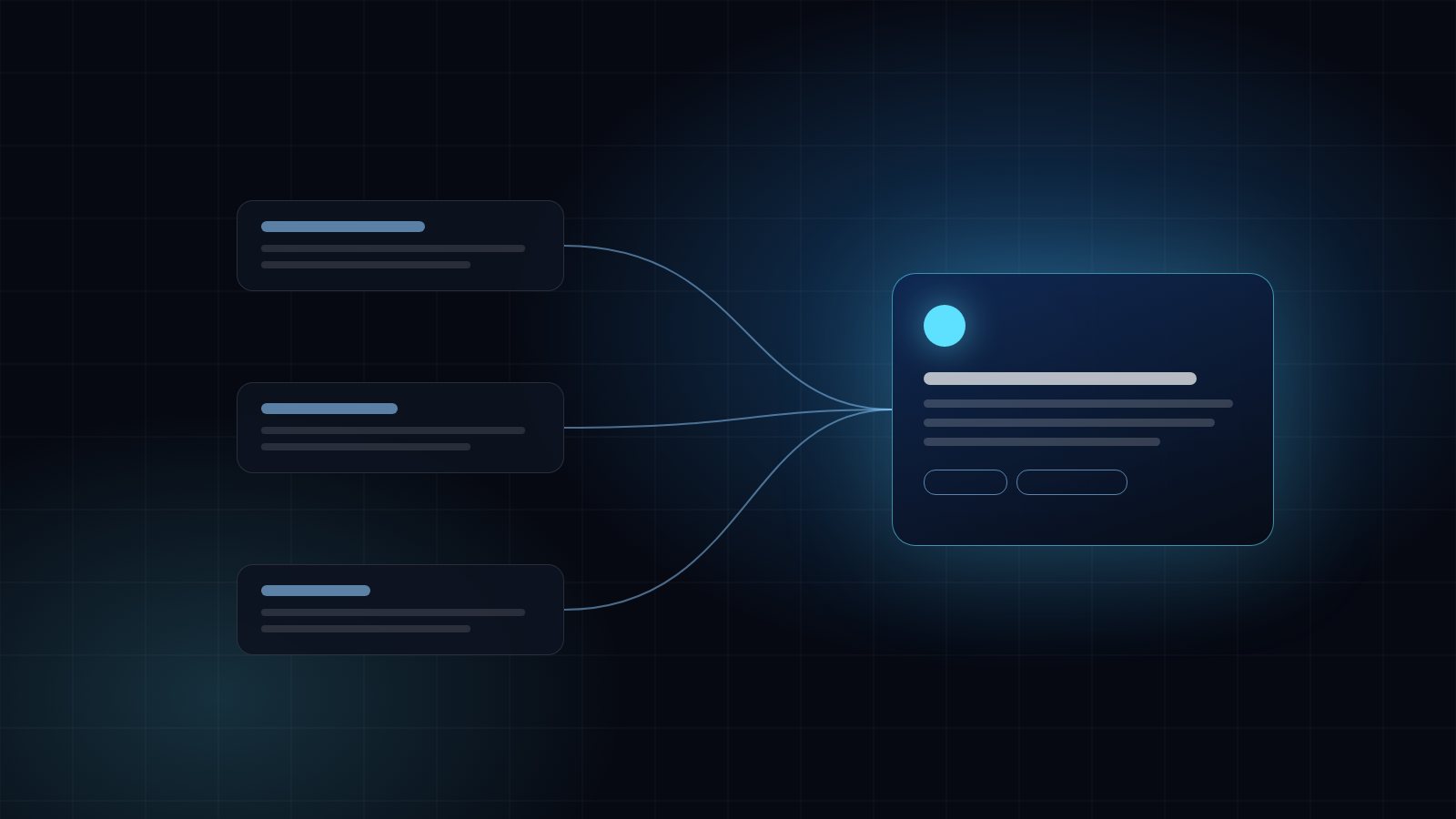
More customers now ask an assistant before they open a search results page, so it is fair to ask how to get cited by ChatGPT, Perplexity and Google's AI Overviews. The short version: these tools quote pages they can reach, understand and trust. Nobody can promise a citation, but you can remove most of the reasons assistants skip a good page.
In short: To get cited by ChatGPT, Perplexity and Google AI Overviews, let their search crawlers reach your pages, make sure Google and Bing index them, answer each question directly near the top of the page, state your business facts the same way everywhere, and earn mentions on other trusted sites. Then check by asking real questions.
This guide covers the practical steps, in the order we would work through them on a small business site.
How do AI assistants choose which sources to cite?
Each assistant works differently and the details change often, so treat any confident "secret formula" with suspicion. What can be said safely is this:
- ChatGPT search runs a web search behind the scenes and shows the pages it drew on. OpenAI lists its own crawler, OAI-SearchBot, for search features in its bots documentation, and it has partnered with Microsoft, so a healthy presence in Bing's index is a sensible precaution.
- Perplexity searches the web for almost every answer and lists its sources prominently. It runs its own crawler, PerplexityBot, which its bots guide describes.
- Google AI Overviews sit inside Google Search. Google's page on AI features and your website says they draw on pages Google has already crawled and indexed.
- Microsoft Copilot relies on Bing's search results.
The common thread: a page that the underlying search engine cannot crawl and index rarely earns a citation. Everything else builds on that.
Step 1: Can the AI crawlers reach your site?
Open yourdomain.com/robots.txt and read it. You are looking for rules that block the crawlers you want.
| Crawler | Who runs it | What it is for |
|---|---|---|
| Googlebot | Google Search, including AI Overviews | |
| Google-Extended | Use in some Google AI models; Google says it does not affect Search | |
| Bingbot | Microsoft | Bing search, which Copilot relies on |
| OAI-SearchBot | OpenAI | ChatGPT search features |
| GPTBot | OpenAI | Training OpenAI models |
| ChatGPT-User | OpenAI | Pages fetched when a user asks ChatGPT to visit them |
| PerplexityBot | Perplexity | Perplexity search |
| ClaudeBot | Anthropic | Crawling for Anthropic's models |
You can allow the search crawlers and still block training crawlers if that is your policy. Check each company's current documentation before you change anything, because companies rename crawlers and change their purposes. Anthropic explains its approach in its crawler help article, and Google covers the rules syntax in its robots.txt introduction.
Also check that your firewall or hosting security rules are not quietly blocking these bots. Some bot-protection settings challenge every unknown crawler, which looks fine in a browser and fails for the assistants.
Step 2: Are your pages indexed in Google and Bing?
Set up Google Search Console and Bing Webmaster Tools if you have not already. Submit your sitemap in both. Then look at the pages that matter most to your business and confirm each one appears in the index.
Common reasons a page is missing:
- a leftover
noindextag from development, - the content only appears after JavaScript runs and the crawler sees an empty shell,
- duplicate pages competing with each other, with no clear canonical URL,
- no internal links pointing to the page.
If you build your site with a JavaScript framework, view the raw HTML of a page (not the inspector) and check that the main text is actually there. Prerendering or server rendering fixes most of these problems, and it is part of how we build a website that search engines can read.
Step 3: Does each page answer one question directly?
Assistants answer questions. A page that gives the answer directly in its first lines is far easier to quote than one that opens with a company history. Answer directly, then explain.
A simple pattern that works:
- A heading phrased like the question people ask ("How much does a website redesign cost?").
- A two or three sentence answer straight underneath.
- The detail, examples, caveats and options after that.
Keep paragraphs short and self-contained, so any one of them still makes sense on its own. Use lists for steps and tables for comparisons. Define terms the first time you use them. This is the core of what people now call generative engine optimisation, and it helps human readers just as much.
Step 4: Are your business facts unmistakable?
When an assistant mentions a business, it needs to be confident it has the right one. Help it by stating the same core facts the same way everywhere:
- the business name, spelt identically,
- what you do, in one plain sentence,
- where you work or which areas you serve,
- how to contact you,
- links to your official social profiles.
Put these on your home page, about page and footer, and keep your Google Business Profile and directory listings consistent with them. Then describe the same facts in structured data: an Organization (or LocalBusiness) block with sameAs links to your profiles, Service or Product blocks on the matching pages, and FAQPage markup only where the questions and answers are visible on the page. Google's structured data introduction is the best place to start.
Structured data will not make a weak page citable, but it removes guesswork about what a page is.
Step 5: Do other trusted sites mention you?
Assistants often cite pages about a topic from more than one source, and they tend to favour sources that others reference. For a small business, the realistic version of this is:
- accurate listings in the directories your industry actually uses,
- genuine reviews on the platforms customers check,
- mentions in local news, trade associations, supplier and partner pages,
- guest articles or interviews where you have something real to say.
Avoid buying links or mass-producing thin guest posts. They break search engine guidelines and they do not build the kind of reputation assistants appear to reward. Our guide to digital marketing channels covers the honest ways to earn attention.
Step 6: What about llms.txt?
llms.txt is a proposed plain-text file at the root of a site that points language models at your most useful pages. It is easy to add and some tools read it, but none of the major assistants has said it is a ranking or citation factor. Treat it as a tidy extra, not a strategy. Our explainer on what llms.txt is goes into the details.
Should you keep your pages up to date?
Fresh, accurate pages serve readers first. Update a page when prices, services, opening hours or policies change, and show a visible "last updated" date so people know what they are reading. Some guides claim assistants check a dateModified value within a set number of days. We found no official documentation for that, so treat such rules as unproven. An out-of-date fact that an assistant repeats still hurts you.
How can you check whether it is working?
There is no single report that shows AI citations across every assistant, so combine a few simple checks:
- Manual prompts. Keep a list of ten to twenty questions your customers ask. Once a month, ask them in ChatGPT (with search on), Perplexity, Copilot and Google. Note which sources appear and whether your pages are among them. Results vary between sessions, so look for trends rather than single answers.
- Referral traffic. In your analytics, look for visits referred from domains such as chatgpt.com, perplexity.ai, copilot.microsoft.com and gemini.google.com. Assistants do not label every visit, but the trend is useful.
- Search Console. Google includes AI Overview appearances in its Search performance data as part of normal web results. Rising impressions on question-style queries are a good sign.
- Enquiries. Ask new customers how they found you. "I asked ChatGPT" is becoming a real answer.
What should you avoid?
- Writing for machines instead of people. Stuffing pages with questions and keywords makes them worse to read and does not reliably help.
- Hiding key facts in images or PDFs. Put prices, service areas and contact details in real text.
- Marking up what is not on the page. Structured data that claims reviews, prices or FAQs the page does not show can do harm.
- Expecting guarantees. Anyone who promises a ChatGPT citation by a date cannot control the outcome.
What can't you control?
Be realistic about the limits:
- Which sources an assistant picks. The ranking systems are private and change often.
- Whether it searches at all. Assistants sometimes answer from memory without citing anything.
- How it words your business. You can supply clear facts, but you cannot edit the answer.
- Timing. A new page can take weeks to appear anywhere.
Focus on what you do control: access, clarity, accurate facts and honest reputation. Our guide to what generative engine optimization is takes the same view.
Where to start this week
Pick your three most valuable pages. For each one, check that it is crawlable and indexed, rewrite the opening so it answers the main question in two sentences, and make sure your business facts on the page match your profiles. That small exercise fixes the most common gaps.
If you would like help, our SEO service includes AI search readiness alongside technical and on-page work, and our AI automation team can set up monthly prompt checks so you are not doing them by hand. Or simply tell us about your site.
Frequently asked questions
How do I get cited by ChatGPT?
Let OpenAI's search crawler reach your pages, make sure Google and Bing index them, and open each page with a direct answer to one question. State your business facts the same way everywhere and earn mentions on trusted sites. Nobody can guarantee a citation, so check progress with real questions.
Can I pay to be cited by ChatGPT?
No. No public programme sells a place in ChatGPT's search citations. Citations come from pages its search system finds and judges relevant, so the work matches earning visibility anywhere else: useful, crawlable, clearly written pages that answer real questions and give accurate facts about your business.
Does blocking GPTBot stop my site appearing in ChatGPT search?
Not by itself. OpenAI documents GPTBot as its crawler for model training and OAI-SearchBot as the crawler for search features. You can block one and allow the other in robots.txt, but read OpenAI's current documentation first, because crawler names and purposes can change.
Does Google-Extended affect AI Overviews?
Google says Google-Extended controls whether it uses your content for some of its AI models, and that it does not affect inclusion or ranking in Google Search. AI Overviews draw on pages that Googlebot already crawls. Check Google's current documentation before you change any rules for these crawlers.
How long does it take to get cited by AI assistants?
No fixed timeline exists. Search systems must crawl a page, index it and then judge it useful for a specific question. For many sites that takes weeks to months, and some pages never earn a citation even when they rank well. Keep improving the pages and check results monthly.
Do I need llms.txt to be cited?
No. llms.txt is a proposed convention, and the major assistants have not said they rely on it. It costs little to add and may help tools that read it, but crawlable pages, clear answers and consistent facts matter far more. Fix those first, then consider the file as an extra.
How do I know if ChatGPT is citing my website?
Ask the questions your customers ask with search turned on, and note which sources appear. Repeat monthly, because answers vary between sessions. Also watch your analytics for visits from chatgpt.com, perplexity.ai and similar domains, and ask new customers how they found you.
Is getting cited by AI different from normal SEO?
Mostly it is the same discipline with more weight on clarity. Pages still need to be crawlable, indexed and trustworthy. The difference is that a direct, quotable answer and unambiguous facts about your business matter more, because an assistant may lift a single passage out of the page.